Au coeur de la Bactriane antique, Aï Khanoum se dresse comme l’un des témoignages les plus saisissants de la rencontre entre héritages grecs et traditions orientales.
Explorée entre 1965 et 1978 par la Délégation archéologique française en Afghanistan, cette ville fondée par Alexandre le Grand ou l’un de ses successeurs, à la frontière actuelle entre l’Afghanistan et le Tadjikistan, est l’une des fondations hellénistiques les mieux connues dans la partie orientale du monde grec. Par l’ampleur de ses monuments, elle compte parmi les sites les plus spectaculaires de la région.
Souvent décrite comme une ville grecque dotée d’équipements familiers – théâtre, gymnase, fontaines –, Aï Khanoum fut surtout une ville royale, aménagée par les souverains séleucides puis gréco-bactriens dont elle constitua l’une des capitales.
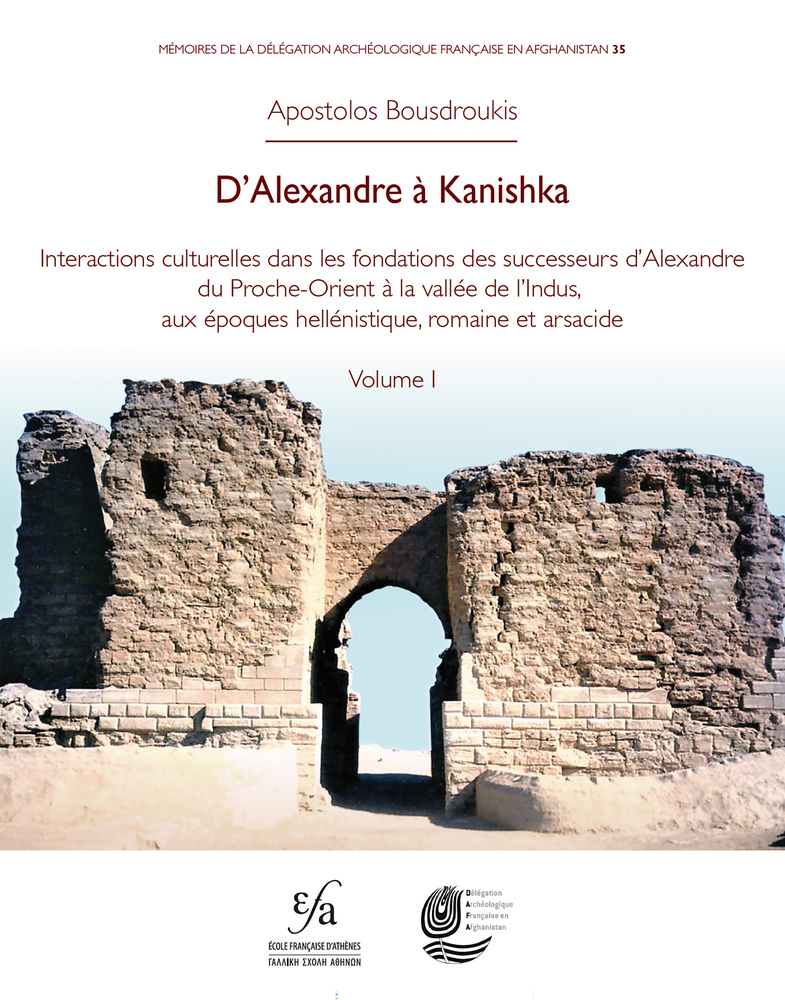
Cet ouvrage est consacré à l’étude de son principal sanctuaire, restitué grâce aux archives des fouilles menées entre 1968 et 1973. Installé au centre de la ville, sur une terrasse dominante, le sanctuaire abritait un temple massif, isolé au milieu d’une cour, qui marquait fortement le paysage urbain. Plusieurs fois reconstruit, parfois entièrement et à des intervalles rapprochés, il est l’un des rares monuments à avoir traversé toute l’histoire de la cité.
L’hypothèse développée ici est qu’il s’agissait d’un sanctuaire royal, étroitement associé aux souverains séleucides et gréco-bactriens, qui y rendaient un culte à des divinités protectrices d’origine bactrienne, achéménide et gréco-macédonienne.
At the heart of ancient Bactria, Ai Khanoum stands as one of the most striking testimonies to the encounter between Greek traditions and the cultures of the East.
Explored between 1965 and 1978 by the French Archaeological Delegation in Afghanistan, this city—founded by Alexander the Great or one of his successors, on the presentday border between Afghanistan and Tajikistan—is among the best-known Hellenistic foundations in the eastern part of the Greek world. Owing to the scale of its monuments, it ranks among the most spectacular sites in the region.
Often described as a Greek city equipped with familiar features—a theater, a gymnasium, fountains—Ai Khanoum was above all a royal city, laid out by the Seleucid and later Greco-Bactrian kings, for whom it served as one of the capitals.
This volume is devoted to the study of its principal sanctuary, reconstructed through the archives of the excavations carried out between 1968 and 1973. Situated at the center of the city on an elevated terrace, the sanctuary housed a massive temple standing alone in the middle of a courtyard, a dominant feature of the urban landscape. Rebuilt several times, sometimes completely and sometimes in close succession, it is one of the few monuments to have existed throughout the entire history of the city.
The hypothesis advanced here is that this was a royal sanctuary, closely associated with the Seleucid and Greco-Bactrian rulers, who worshipped there protective deities of Bactrian, Achaemenid, and GrecoMacedonian
origin.